
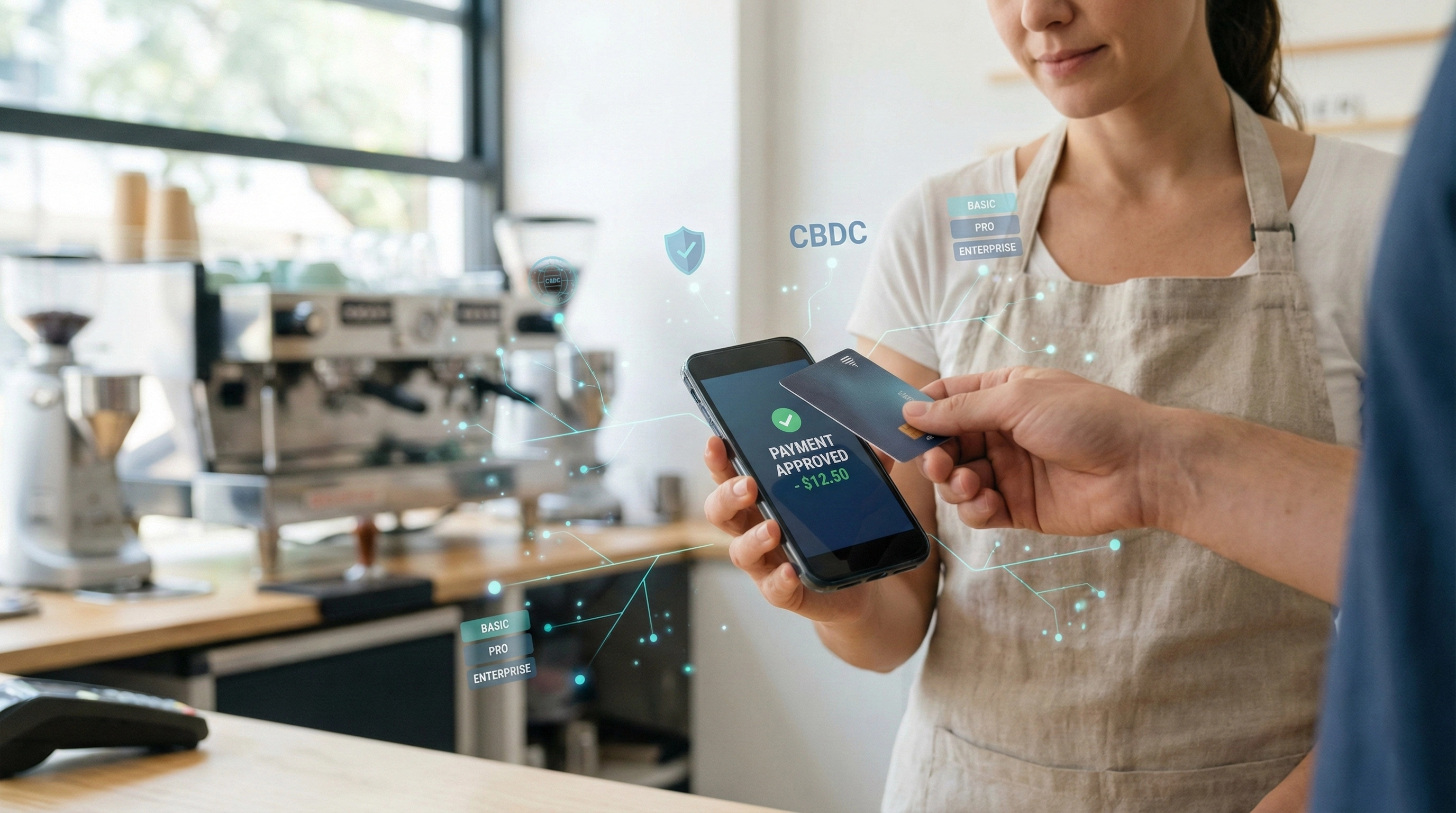
The global shift toward digital payment solutions has fundamentally transformed how individuals and businesses handle financial transactions. In 2026, the ecosystem has matured beyond simple processing infrastructure into sophisticated AI-native platforms that optimize every aspect of the payment journey. With over 3.2 billion digital wallet users worldwide and transaction volumes exceeding $11.8 trillion annually, digital payments now represent the primary commerce mechanism across developed and emerging markets alike.
What defines excellence in 2026 isn't headline features—it's operational reality. Central Bank Digital Currencies (CBDCs) are no longer experimental pilots but active payment rails in major economies. Biometric authentication has become standard security protocol, not a premium add-on. AI-powered smart routing now determines transaction success rates more than network infrastructure alone. The competitive advantage belongs to platforms that have fully integrated these capabilities into core functionality rather than marketing them as future possibilities.
True digital payment leadership in 2026 requires AI-native architecture, not AI features bolted onto legacy systems. The platforms profiled here represent the operational standard for high-growth businesses, not aspirational technology demos. Every featured solution processes millions of real-world transactions daily with documented uptime exceeding 99.95%.
The 2026 Digital Payment Landscape: What Changed
The shift from 2025 predictions to 2026 reality reveals which innovations delivered measurable business value versus those that remained primarily marketing narratives. Several transformative capabilities have moved from "emerging trends" to fundamental requirements for competitive payment platforms.
1. AI-Native Payment Intelligence: Beyond Fraud Detection
While 2025-era platforms implemented AI primarily for fraud prevention, 2026 leaders have deployed machine learning across the entire transaction lifecycle. Dynamic Currency Conversion now operates automatically, analyzing user location, historical conversion rates, and real-time foreign exchange markets to select optimal currencies without manual configuration. This reduces friction for international customers while maximizing conversion rates—critical for global e-commerce operations.
AI Smart Routing represents perhaps the most significant operational advancement. Rather than static rules determining which acquiring bank processes each transaction, modern platforms analyze dozens of variables in real-time: current failure rates by bank and card type, regional network congestion, regulatory requirements by jurisdiction, and historical success patterns. The result? Leading platforms now report authorization rates 8-12% higher than traditional routing approaches—a difference that directly impacts revenue for high-volume merchants.
2. SoftPOS Revolution: The Smartphone Terminal Era
SoftPOS (Software Point of Sale) technology has fundamentally disrupted the payment terminal market. In 2026, small and medium businesses no longer need to purchase dedicated hardware to accept contactless payments. Standard iPhones and Android devices now function as PCI-compliant payment terminals through certified applications, eliminating upfront hardware costs entirely while providing identical security guarantees to traditional terminals.
Major platforms including Stripe, Square, and emerging players like SumUp now offer tap-to-pay capabilities that transform any NFC-enabled smartphone into a payment acceptance device. For businesses operating in temporary locations—food trucks, pop-up shops, service providers working on-site—this represents a paradigm shift. The same device used for business communication now processes payments without additional equipment investment.
Security protocols haven't been compromised in pursuit of convenience. SoftPOS implementations leverage hardware-backed security enclaves in modern smartphones, providing encryption equivalent to dedicated terminals. All major card networks (Visa, Mastercard, American Express, Discover) have certified SoftPOS solutions, ensuring full compliance with payment industry standards while dramatically reducing barriers to payment acceptance.
3. Tiered Subscription Pricing: The SaaS Payment Model
Traditional payment processing operated on pure transaction-based pricing: merchants paid a percentage plus fixed fee per transaction, regardless of volume or feature access. This model penalized growth—higher volume merchants subsidized platform costs for smaller users while receiving identical service levels.
2026 has witnessed the rise of tiered subscription models that align pricing with actual platform value. Merchants now choose subscription tiers based on processing volume and required features, paying monthly fees in exchange for reduced per-transaction costs. High-volume businesses accessing advanced features like AI routing, multi-currency optimization, and dedicated support pay premium subscriptions but benefit from significantly lower marginal transaction costs.
| Pricing Model | Best For | Key Advantage |
|---|---|---|
| Pay-As-You-Go | Startups, low volume (<$10k/month) | Zero fixed costs, simple pricing |
| Tiered Subscription | Growth businesses ($10k-$500k/month) | Lower transaction fees, advanced features |
| Enterprise Custom | High volume (>$500k/month) | Customized rates, dedicated infrastructure |
4. CBDC Integration: Digital Currencies as Payment Rails
Central Bank Digital Currencies have transitioned from theoretical constructs to operational payment infrastructure. While universal adoption remains years away, major economies including the European Union (Digital Euro pilot programs), China (expanded e-CNY deployment), and several emerging markets now support CBDC transactions through leading payment platforms.
For businesses operating in markets with active CBDC programs, integration is no longer optional—it's a competitive requirement. Platforms offering native CBDC support enable merchants to accept government-backed digital currencies alongside traditional payment methods, reducing settlement times to near-instant while eliminating intermediary fees associated with card network processing.
Top 12 Digital Payment Solutions for 2026
Payment Gateways & Merchant Services
1. Stripe — AI-Native Payment Infrastructure
Pricing: 2.9% + $0.30 per transaction (Standard) | Volume discounts via custom enterprise pricing
Best For: Technology companies, SaaS businesses, marketplaces requiring sophisticated automation
Stripe maintains its position as the developer-first payment platform through continuous innovation in automation and intelligence. The 2026 platform includes Stripe Adaptive Pricing, which uses machine learning to optimize authorization rates across global payment networks, and Revenue Recognition Automation that handles complex subscription billing scenarios without custom development.
Key 2026 additions include native CBDC support through partnerships with central banks in pilot markets, expanded SoftPOS capabilities via Stripe Terminal SDK for iOS and Android, and AI-powered dispute management that automatically generates evidence packages for chargeback responses with 78% win rates (30% higher than industry average).
2. PayPal — Consumer Trust & Global Reach
Pricing: 3.49% + $0.49 per transaction (Standard) | 2.99% + $0.49 (PayPal Checkout) | PayPal Complete subscription plans from $29/month
Best For: E-commerce retailers, businesses requiring buyer protection credibility
PayPal's enduring strength lies in consumer recognition and trust. In 2026, this translates to measurably higher conversion rates for merchants displaying PayPal checkout options—independent studies show 15-20% higher completion rates compared to credit card-only checkouts, particularly among older demographics wary of new fintech solutions.
The platform's 2026 evolution includes PayPal Advanced subscription tiers offering reduced transaction fees for high-volume merchants, integrated fraud protection powered by AI analysis of billions of historical transactions, and Pay in 4 buy-now-pay-later functionality that increases average order values by 25-40% across multiple retail categories.
3. Square — SoftPOS Pioneer for SMBs
Pricing: 2.6% + $0.10 per transaction (tap, dip, swipe) | Free SoftPOS app with standard rates | Square Plus subscription $29/month for lower fees
Best For: Retail stores, restaurants, mobile businesses, service providers
Square revolutionized small business payment acceptance in 2026 by making its SoftPOS technology completely free for existing customers. Any business using Square can now accept contactless payments directly on their iPhone or Android device without purchasing additional hardware—a game-changing proposition for micro-businesses and service providers.
Beyond payments, Square's integrated ecosystem includes inventory management, employee scheduling, customer relationship management, and detailed sales analytics—all accessible through a single platform. For businesses seeking all-in-one operational software rather than simply payment processing, Square represents the most comprehensive solution available.
Mobile Wallets & P2P Platforms
4. Apple Pay — Seamless iOS Ecosystem Integration
Pricing: Free for consumers | Merchants pay standard processor fees (typically 2.5-3%)
Best For: Businesses targeting premium demographics, in-app purchases, contactless retail
Apple Pay continues to dominate contactless payments in markets with high iPhone penetration. The 2026 platform includes Tap to Pay on iPhone as standard functionality for all merchant-facing iOS apps, eliminating the need for external terminals when accepting in-person payments. Small businesses can now process contactless transactions using nothing more than an iPhone and approved payment app.
Security remains Apple's defining advantage. Every transaction uses device-specific numbers and unique transaction codes—actual card numbers are never stored on devices or shared with merchants. Biometric authentication via Face ID or Touch ID provides frictionless security that consumers trust implicitly.
5. Google Pay — Android Dominance & Cross-Platform Flexibility
Pricing: Free for consumers | Merchants pay processor-based fees
Best For: International markets, businesses serving Android-dominant demographics
Google Pay's global footprint exceeds Apple Pay in absolute user numbers due to Android's international market share. The platform's 2026 expansion includes enhanced integration with Google's broader ecosystem—Google Search, Maps, and Shopping now surface saved payment methods automatically for frictionless checkout experiences across Google properties.
For merchants, Google Pay integration provides access to detailed consumer insights (with appropriate privacy controls) that inform marketing strategies and customer segmentation. The platform's AI analyzes purchase patterns to surface relevant offers and promotions, increasing repeat purchase rates without requiring merchants to build custom recommendation engines.
6. Venmo — Social Payments for Younger Demographics
Pricing: Free for P2P with linked bank account | 3% fee for credit cards | 1.9% + $0.10 for business profiles
Best For: Small businesses targeting Gen Z and Millennials, social commerce
Venmo's social feed functionality transforms payments into shareable social experiences—a feature that resonates particularly with younger users who view financial transactions as social interactions rather than purely functional exchanges. This social context drives organic discovery for small businesses accepting Venmo, as purchases appear in friends' feeds with merchant tags and payment descriptions.
In 2026, Venmo has expanded beyond peer-to-peer transfers into comprehensive business functionality. Venmo Business Profiles enable small merchants to accept payments via QR codes, online checkout integration, and in-app transactions while maintaining the platform's signature social engagement features that traditional payment processors lack entirely.
Cryptocurrency & Blockchain Platforms
7. Coinbase Commerce — Cryptocurrency Payment Gateway
Pricing: 1% per transaction | No monthly fees
Best For: Businesses serving crypto-native audiences, international commerce, high-value transactions
Coinbase Commerce provides merchants with the infrastructure to accept Bitcoin, Ethereum, and major stablecoins as payment while automatically converting proceeds to traditional currency if desired. The platform's 2026 evolution includes integrated tax reporting for cryptocurrency transactions, automated compliance with regional crypto regulations, and instant settlement for stablecoin payments.
For businesses dealing with international transactions, cryptocurrency payments offer significant cost advantages over traditional wire transfers or forex conversions. Settlement times measure in minutes rather than days, and fees remain flat regardless of transaction value—a stark contrast to percentage-based credit card processing that penalizes high-ticket purchases.
8. BitPay — Enterprise Crypto Processing
Pricing: 1% per transaction (no monthly fee on Starter) | Premium plans from $300/month with lower fees
Best For: Established businesses adding cryptocurrency acceptance, international remittances
BitPay serves as the enterprise-grade cryptocurrency processor, offering the compliance infrastructure and financial controls that regulated businesses require. The platform provides instant conversion from cryptocurrency to local currency, eliminating volatility exposure while retaining the benefits of blockchain-based settlement.
In 2026, BitPay has expanded into payroll services using stablecoins—enabling businesses to compensate international contractors via cryptocurrency payments while maintaining full tax compliance and reporting. This solves long-standing challenges in cross-border employment where traditional banking infrastructure creates delays and excessive fee structures.
International Money Transfer Services
9. Wise (formerly TransferWise) — Transparent International Transfers
Pricing: 0.35-1% of transfer amount (varies by currency pair) | Always shows real exchange rate
Best For: International businesses, expatriates, freelancers working globally
Wise revolutionized international money transfers by eliminating hidden fees and markup on exchange rates. The platform uses real mid-market rates (the actual rate banks trade at) and charges transparent percentage-based fees rather than burying costs in unfavorable currency conversions—a practice that saves users billions annually compared to traditional bank wire transfers.
For businesses operating across borders, Wise Business now includes multi-currency accounts allowing companies to hold and manage funds in 50+ currencies simultaneously. This enables receipt of international payments without conversion fees, payment of suppliers in their local currencies, and strategic timing of currency exchanges based on favorable rate movements.
10. Revolut — Digital Banking Meets Payments
Pricing: Free tier available | Premium from $9.99/month | Business plans from $25/month
Best For: Digital nomads, international freelancers, businesses with multi-currency needs
Revolut blurs the line between digital bank and payment processor, offering comprehensive financial services through a single mobile application. Users maintain multiple currency wallets, exchange between currencies at interbank rates, send international transfers, and access business expense management tools—functionality traditionally requiring relationships with multiple financial institutions.
The 2026 platform includes Revolut Open Banking, enabling businesses to connect external bank accounts for consolidated financial visibility, automated reconciliation, and intelligent cash flow forecasting powered by AI analysis of historical transaction patterns. This transforms Revolut from a payment tool into a complete financial operations platform for modern businesses.
Specialized Payment Solutions
11. Klarna — Buy Now, Pay Later Integration
Pricing: Free for consumers (0% APR on standard plans) | Merchants pay 5.99% + $0.30 per transaction
Best For: E-commerce retailers, businesses with average order values $100-$1000
Klarna's buy-now-pay-later functionality addresses a fundamental e-commerce challenge: converting browsers with purchase intent but insufficient immediate funds into completed transactions. By offering interest-free installment plans (typically 4 payments over 6 weeks), Klarna increases both conversion rates and average order values—merchants report 30-45% higher order values when Klarna checkout is available.
The platform assumes all credit risk, advancing full payment to merchants immediately while collecting installments from consumers. This eliminates payment collection from merchant responsibilities entirely while still capturing sales that would otherwise be lost to budget constraints. For fashion retailers, home goods sellers, and other categories with moderate ticket prices, Klarna has become essential checkout infrastructure rather than an optional add-on.
12. Adyen — Unified Commerce Platform
Pricing: Custom enterprise pricing | Typically Interchange++ (actual card fees) + 0.12-0.60% platform fee
Best For: Large enterprises, omnichannel retailers, platforms with complex payment routing needs
Adyen serves enterprise-scale businesses requiring unified payment processing across online, mobile, and physical retail channels. The platform's strength lies in technical sophistication—merchants can implement complex routing logic, manage multiple acquiring relationships globally, and maintain consistent checkout experiences regardless of customer touchpoint.
In 2026, Adyen has become the de facto standard for large retailers implementing unified commerce strategies where inventory, customer data, and payment processing synchronize across all channels. The platform's AI-powered authorization optimization and global network of local acquiring banks enable authorization rates exceeding 92% globally—several percentage points higher than industry averages, translating to millions in recovered revenue for high-volume merchants.
2026 Regulatory Landscape: Compliance Requirements
The regulatory environment for digital payments has intensified significantly in 2026, with new data protection laws, consumer protection requirements, and cross-border compliance obligations reshaping platform operations.
Enhanced Data Privacy Standards
EU Digital Services Act now mandates that payment platforms storing customer data for one-click checkout experiences must provide users with granular control over data retention periods, sharing permissions, and deletion requests. Businesses operating in EU markets must ensure their payment provider supports these compliance requirements natively rather than through manual processes.
India's Digital Personal Data Protection Act requires explicit user consent for payment credential storage with periodic re-confirmation requirements. Platforms serving Indian customers must implement consent management infrastructure that meets these evolving standards while maintaining checkout convenience.
PCI DSS 4.0 Migration
Payment Card Industry Data Security Standard version 4.0 became mandatory in March 2025, but 2026 has seen enforcement intensify. The updated standard requires enhanced multi-factor authentication, expanded logging requirements, and stricter controls around third-party service provider access. Businesses must verify that their payment platform has achieved full PCI DSS 4.0 compliance rather than operating under transitional provisions.
Cross-Border Transaction Monitoring
Anti-money laundering (AML) and know-your-customer (KYC) requirements have expanded globally. Payment platforms now implement AI-powered transaction monitoring that flags unusual cross-border payment patterns for review. For businesses engaging in international commerce, this means ensuring proper documentation of business relationships, transaction purposes, and beneficial ownership information to prevent payment delays or account restrictions.
Payment platform selection must prioritize regulatory compliance as a primary criterion rather than an afterthought. Platforms that build compliance into core architecture provide significantly better long-term stability than those treating it as a checkbox exercise. Verify that your provider maintains certifications relevant to your operational markets and updates systems proactively to meet evolving standards.
Strategic Payment Selection Framework for 2026
Choosing the right payment infrastructure requires evaluating factors beyond simple transaction costs. Modern businesses need platforms that scale with growth, integrate with existing tools, and provide the technical capabilities required for competitive operations.
Priority 1: AI-Native Capabilities vs. AI Features
Distinguish between platforms that have integrated AI into core architecture versus those offering AI as optional features. True AI-native platforms use machine learning for transaction routing, fraud detection, currency optimization, and authorization rate improvement as standard functionality—not premium add-ons. This distinction directly impacts operational performance: AI-native platforms report authorization rates 5-8% higher than traditional systems across comparable transaction volumes.
Priority 2: Total Cost of Ownership Beyond Transaction Fees
Headline transaction fees often obscure true costs. Consider integration expenses, monthly platform fees, chargeback handling charges, international transaction surcharges, and currency conversion margins. For many businesses, platforms with slightly higher transactional fees but comprehensive subscription plans deliver lower total costs at scale.
Calculate break-even points: if processing $50,000 monthly, a platform charging 2.5% + $0.30 per transaction with a $50 monthly fee may cost less than one charging 2.9% + $0.30 with no monthly fee. Run actual projections using your volume, average transaction size, and feature requirements rather than comparing percentage rates in isolation.
Priority 3: Ecosystem Integration Depth
Payment platforms don't operate in isolation—they need to exchange data with e-commerce platforms, accounting systems, CRM software, and analytics tools. Evaluate not just whether integrations exist, but their quality. Native integrations built by payment providers generally offer superior reliability and feature depth compared to third-party middleware connections.
For businesses using Shopify, WooCommerce, BigCommerce, or other major e-commerce platforms, prioritize payment providers offering first-party integrations with automatic order synchronization, refund handling, and subscription management rather than requiring custom development or third-party plugins.
Priority 4: Geographic Coverage Alignment
Global payment platforms don't actually operate globally with equal capabilities. Each provider maintains varying levels of support across regions—some offer full local acquiring in specific markets while only supporting gateway services in others. Businesses selling internationally must verify that platforms support local payment methods popular in target markets.
For example, companies targeting European markets need platforms supporting SEPA direct debit, iDEAL (Netherlands), and Bancontact (Belgium). Asian markets require Alipay, WeChat Pay, and local mobile wallet support. Latin American expansion demands Boleto Bancário (Brazil) and OXXO (Mexico) integration. Generic "global coverage" claims require market-specific verification.
Maximizing Payment Platform Value in 2026
Beyond basic transaction processing, modern payment platforms offer capabilities that directly improve business performance when properly leveraged.
Implement Revenue Recovery Automation
Failed payments cost businesses 6-9% of potential revenue on average. Modern platforms include automated retry logic that attempts failed transactions at optimal times using different payment networks or authentication methods. Enable these features and configure retry schedules based on failure reasons—expired cards need different handling than insufficient funds.
Leverage AI-Powered Fraud Prevention
Traditional rule-based fraud systems generate excessive false positives, declining legitimate transactions while maintaining vulnerability to sophisticated fraud. AI-powered systems analyze hundreds of data points per transaction to identify genuine fraud with minimal impact on legitimate customers. Configure systems to balance fraud prevention with customer experience rather than implementing maximum-security settings that increase false declines.
Optimize Checkout Flow Testing
Payment platforms now offer A/B testing capabilities for checkout experiences. Test different payment method ordering, field arrangements, progress indicators, and trust signals to identify configurations that maximize completion rates. Even small improvements—2-3% higher conversion—compound into significant revenue increases at scale.
Conclusion: Building Payment Infrastructure for Growth
The digital payment landscape in 2026 rewards sophistication over simplicity. While basic payment processing remains commoditized, the advanced capabilities separating category leaders from followers—AI-native routing, SoftPOS flexibility, tiered subscription economics, CBDC integration—require deliberate platform selection aligned with business growth trajectories.
The platforms profiled represent operational leaders based on 2026 market reality, not future promises. Each processes billions in annual transaction volume with documented reliability, security, and regulatory compliance across multiple jurisdictions. Selection depends less on identifying a universally "best" solution than finding the platform whose specific strengths align with your business model, customer demographics, and operational requirements.
As payment technology continues evolving—with quantum-resistant encryption, expanded CBDC adoption, and further AI integration on near-term horizons—the platforms demonstrating continuous innovation while maintaining operational stability will sustain competitive advantages. Reevaluate payment infrastructure annually as capabilities expand and business needs evolve rather than treating initial selection as permanent.
Frequently Asked Questions
What is the difference between an AI-native payment platform and a legacy system with AI features?
AI-native platforms are built from the ground up with machine learning integrated into their core architecture, allowing real-time optimization across the entire transaction lifecycle. In contrast, legacy systems simply bolt AI features onto older infrastructure, which limits their ability to dynamically route payments or adapt to emerging fraud patterns efficiently.
Is it secure for merchants to use standard smartphones as payment terminals (SoftPOS)?
Yes, SoftPOS technology is fully PCI-compliant and leverages the hardware-backed security enclaves built into modern iOS and Android devices. Actual card data is never stored on the merchant's phone; instead, transactions are encrypted instantly at the point of tap, providing the exact same security guarantees as traditional, dedicated hardware terminals.
How does dynamic bank selection (Smart Routing) increase authorization rates?
Smart routing uses AI to analyze dozens of real-time variables—such as network congestion, historical success patterns, and regional bank performance—to send each transaction down the most likely path to approval. By avoiding temporary outages and optimizing for specific card types, high-volume merchants typically see an 8-12% increase in successful authorizations, directly boosting top-line revenue.
How do businesses practically accept Central Bank Digital Currencies (CBDCs) alongside traditional payments?
In 2026, leading payment gateways natively integrate CBDC rails into their existing checkout flows, meaning merchants don't need separate infrastructure to accept digital sovereign money. When a customer pays with a CBDC like the digital euro or e-CNY, the platform processes it alongside credit cards and digital wallets, often settling instantly with zero intermediary network fees.
Why should high-volume merchants choose a tiered subscription model over standard pay-as-you-go pricing?
Standard pay-as-you-go models (like a flat 2.9% + $0.30) penalize growth, as merchants pay the same high margin regardless of their scale. By switching to a tiered subscription, businesses pay a fixed monthly platform fee in exchange for significantly reduced per-transaction costs, which mathematically lowers the total cost of ownership once processing volumes exceed $10,000 to $50,000 monthly.
What does the strict enforcement of PCI DSS 4.0 mean for merchants in 2026?
The mandatory shift to PCI DSS 4.0 requires businesses to implement enhanced multi-factor authentication and much stricter controls over how customer data is retained and accessed by third parties. Merchants must ensure their payment providers natively support these advanced security protocols, as operating under older transitional compliance standards is no longer legally viable.