In 2026, the choice of content marketing tools is no longer just about workflow efficiency or basic keyword research. It is fundamentally a question of adapting to AI-driven answer engines like ChatGPT Search and Google's AI Overviews. For most modern marketing organizations, the decision has become practical rather than theoretical: use specialized tools that optimize for entity-based relationships, and abandon legacy platforms that focus purely on keyword density.
Quick Verdict: Best Tools by Category
Best SEO Intelligence
Comprehensive tracking for both traditional SERPs and AI-driven visibility metrics.
Best AI Integration
Purpose-built for LLM-assisted creation and answer engine optimization.
Best All-in-One CRM
Unifies content management, email automation, and complex ROI attribution.
The AI Citation Economy
Three market shifts define the current landscape. First, traditional blue-link search volume has significantly shifted to direct-answer AI platforms, making zero-click SEO a primary strategy. Second, top tools now enforce strict authenticity scoring to separate original insights from commodity AI content. Finally, while basic keyword tools exist, organizations require integrated platforms that serve as centralized intelligence hubs for semantic relationship mapping.
Introduction - The Shift to Algorithm-Native Content
For decades, the digital marketing software market was defined by a simple choice: link builders or on-page optimizers. By 2026, that debate has evolved into something far more consequential - structuring data for LLM ingestion versus relying on legacy web crawlers. This shift represents the first meaningful evolution in years for organizations seeking to maintain digital visibility.
Despite billions spent on traditional content production, brands lacking proper entity optimization currently reach only a fraction of their potential audience. Markets operating in highly technical, B2B, or niche sectors remain dependent on building actual topical authority. In an era shaped by synthesized search answers and AI overviews, basic blog posts are no longer merely inadequate—they are functionally invisible.
Defining the New Paradigms
- Entity-Based SEO: Optimizing for how LLMs understand semantic relationships between concepts, rather than stuffing exact-match phrases.
- Legacy Keyword Optimization: The outdated practice of mapping content to singular search queries, which fails to capture intent in conversational AI engines.
Core Categories of Your 2026 Tech Stack
Understanding the fundamental capabilities behind each software category clarifies their strategic value.
AI Writing & Ideation: The Velocity Engine
Platforms like Jasper AI and Copy.ai operate as enterprise-grade co-pilots. Unlike free consumer chat interfaces that lack brand context, these tools ingest organizational tone and compliance standards.
- Mechanism: Context-aware LLMs that learn from your best-performing historical assets.
- Benefit: Significantly higher output velocity with standardized formatting for AI parsing.
- Trade-off: Requires dedicated human editorial oversight to inject original insights.
- Tools (2026): Jasper AI, Clearscope, and specialized prompt management systems.
SEO & Intelligence: The Strategy Layer
Intelligence platforms deliver market research by analyzing billions of semantic data points, structured data gaps, and competitor knowledge graphs.
- Mechanism: Tracking both SERP placements and direct citations in AI engine responses.
- Sweet Spot: Uncovering entity gaps that competitors have missed in comprehensive topic coverage.
- Trade-off: Steep learning curves and complex dashboard configurations required for maximum ROI.
Semrush vs Ahrefs: The Intelligence Duel (2026)
| Metric | Semrush | Ahrefs |
|---|---|---|
| Primary Strength | AI Visibility Tracking & Content Suites | Massive Backlink Index & Clean UI |
| Content Tools | Built-in SEO Writing Assistant | Advanced Content Explorer engine |
| Learning Curve | Steep but highly comprehensive | Moderate and highly focused |
| Best For | Full-stack marketers & multi-channel agencies | Pure SEO professionals & link builders |
Feature Depth & Breadth: Semrush provides an expansive suite covering social media tracking, local SEO, and comprehensive content ideation. Ahrefs maintains a leaner approach, focusing intensely on possessing the most accurate crawler data and granular backlink analytics.
AI Integration: Semrush has leaned heavily into the modern era, rolling out AI visibility scoring that tracks how often brands are cited in LLM outputs. Ahrefs has taken a more conservative approach, prioritizing traditional search metrics and strict technical auditing.
Reporting & Workflows: Semrush requires time to configure but offers highly customizable white-label reporting. Ahrefs is largely preferred for quick, ad-hoc research due to its intuitive interface and rapid data retrieval.
Tool Pricing - Suite vs. Point Solutions
All-In-One Suites (e.g., HubSpot)
- Entry Cost: $800+ monthly
- Capabilities: CRM, CMS, Automation, Reporting
- Integration: Native cross-channel data flow
- Hidden costs: Mandatory onboarding fees and dedicated administrative overhead
Targeted Point Solutions
- Entry Cost: $15-$150 monthly per tool
- Capabilities: Specialized (e.g., just grammar, just scheduling)
- Integration: Relies on APIs and Zapier
- Hidden costs: Data fragmentation and managing multiple subscription renewals
The Importance of First-Party Data
- AI Platforms: Synthesize existing knowledge, meaning aggregated content provides zero competitive moat.
- Research Tools: Platforms like SurveyMonkey or Typeform are now critical marketing tools for generating original data points.
- Bottom line: For thought leadership, original data policy matters more than peak content production volume.
Content Authenticity Scoring
- Detection Tools: Copyleaks and Originality.ai are used to ensure human-led oversight.
- E-E-A-T Framework: Author portfolio certification tools build the entity authority that LLMs recognize.
- The Standard: Pure AI content faces algorithmic penalty; human-verified content remains the premium standard.
Real-World Implementation Scenarios
Solo Creators
Best Stack: Jasper AI + GA4 + Canva Pro
Viable Strategy: High velocity ideation with personalized human editing.
Mid-Sized Marketing Teams
Ranking Priority: Semrush > WordPress > Mailchimp > Buffer.
Structured workflows are critical for consistent brand voice across 3-5 contributors.
Multi-Client Agencies
Clear Winner: HubSpot Marketing Hub.
Disparate tools create reporting nightmares; unified ecosystems justify enterprise pricing.
Final Decision Framework
- If budget allows for enterprise consolidation, choose a unified CRM suite.
- If executing a highly specialized SEO strategy, invest deeply in Semrush or Ahrefs.
- If volume is the primary bottleneck ? AI writing platforms are the definitive solution.
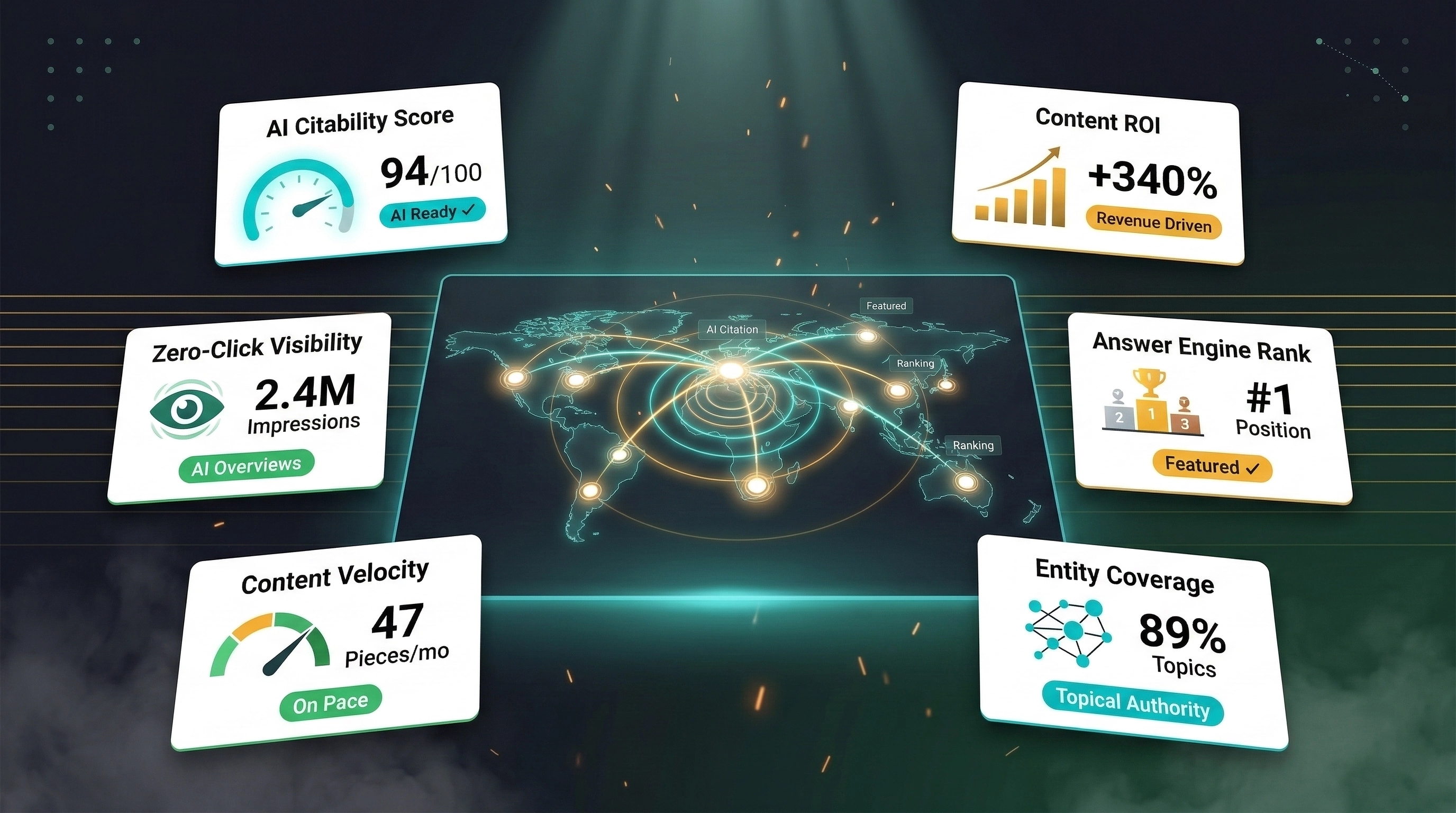
"The most successful content operations now use dual-metric dashboards tracking both traditional SERP performance and AI citation frequency across ChatGPT and Perplexity."
FAQ
Are AI writing tools replacing human content marketers?
No, but marketers using AI are replacing those who don't. Tools assist with drafting and optimization, but human strategy and unique insights remain the differentiator.
Which is the best content marketing tool for beginners?
Canva for visuals and basic WordPress/Yoast for publishing offer the lowest barrier to entry with immediate professional results.
How much should a mid-sized team budget for tools?
Typically between $300 to $1,500 monthly, depending on whether you adopt an all-in-one suite or stack multiple point solutions.
Do traditional SEO tools still matter in 2026?
Absolutely. While AI search is growing, platforms like Semrush have adapted to measure semantic entities and structural data alongside traditional metrics.