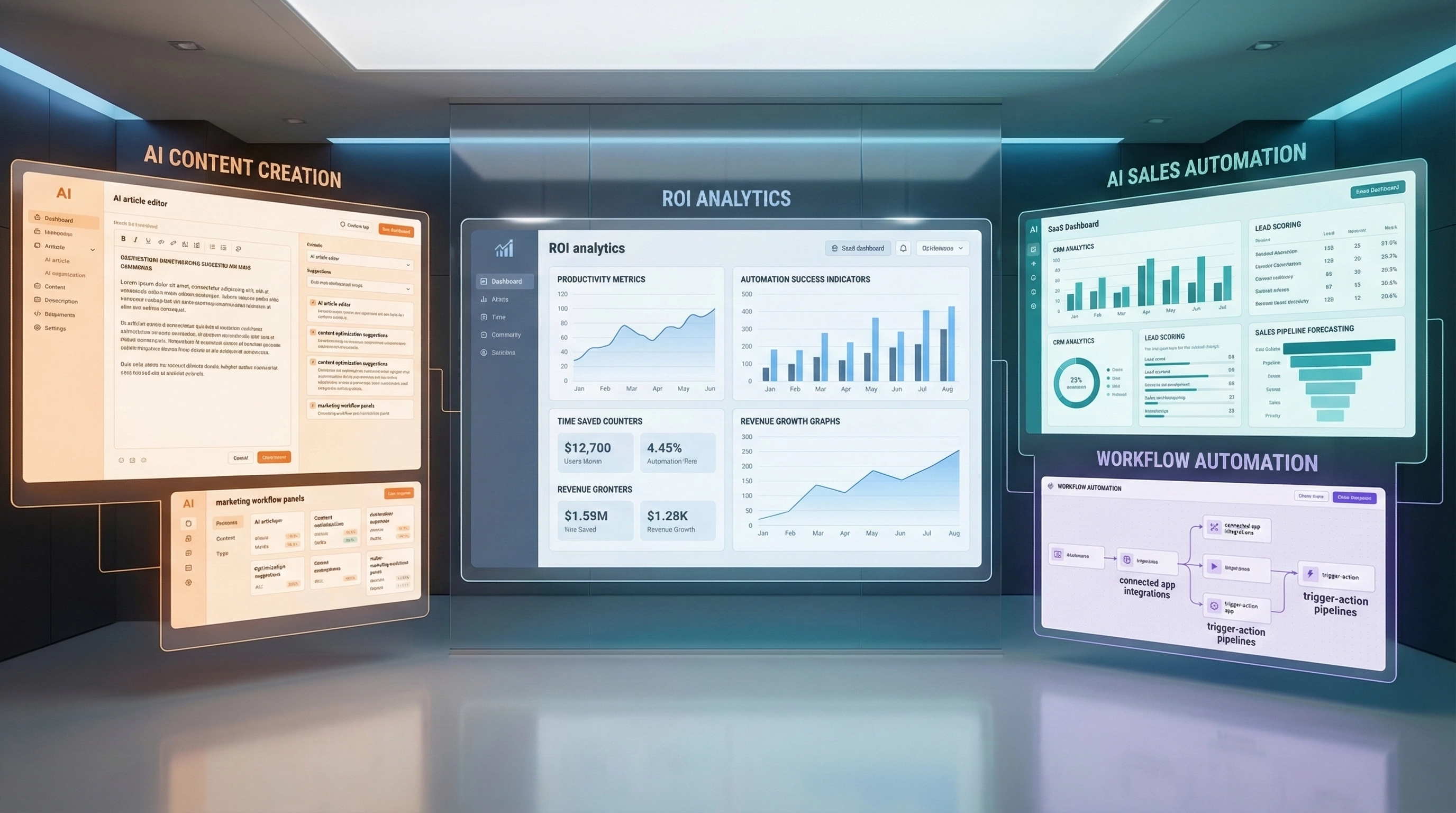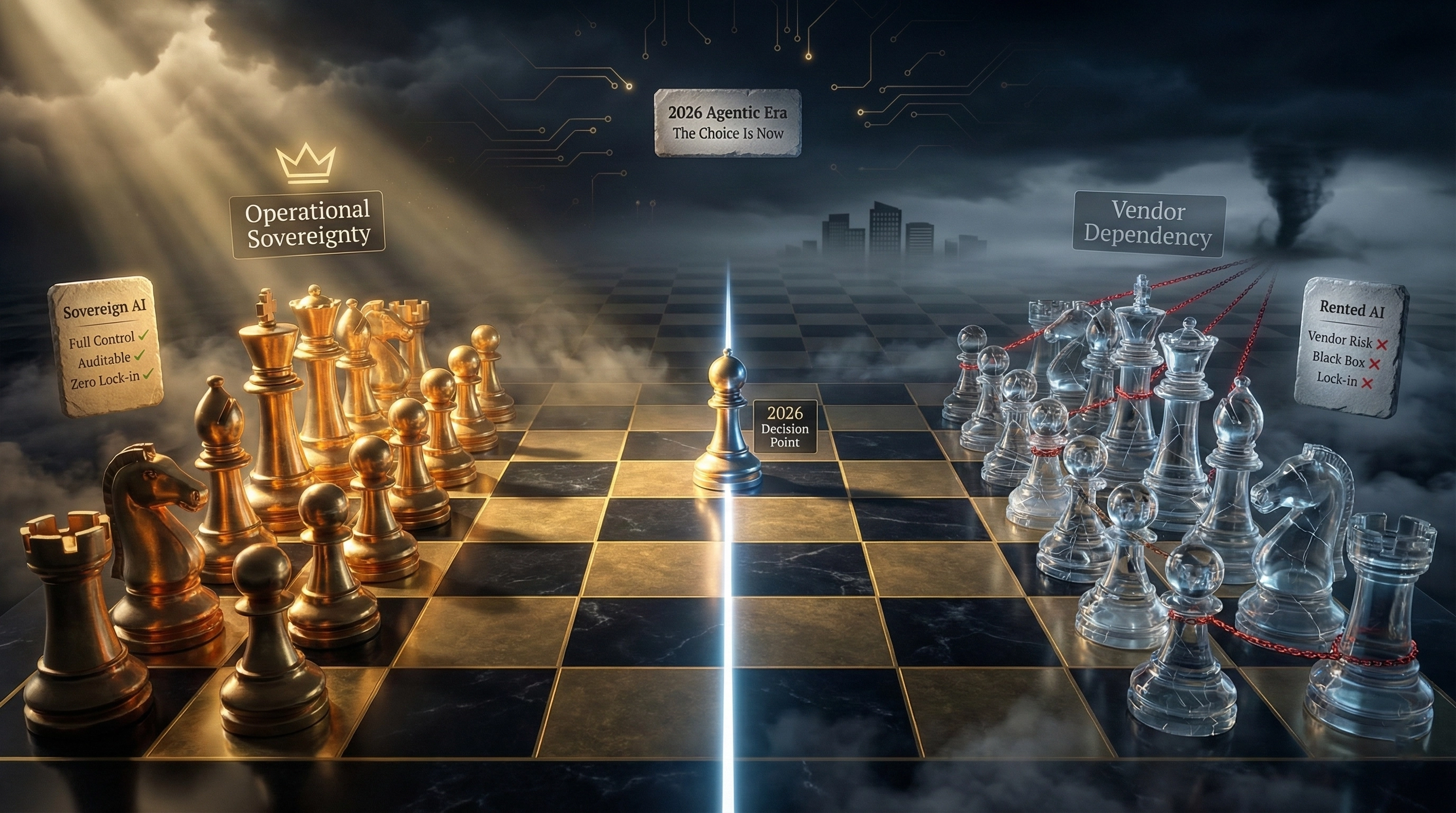
Remember late 2023? ChatGPT felt like magic. Every CEO on Earth was screaming 'AI' on earnings calls to boost their stock price. Investors poured money into anything with a .ai domain name, convinced they were buying a ticket to the next industrial revolution. It felt like a perpetual motion machine of money.
Now that we are solidly in 2026, the music has noticeably slowed down. The "tourist" investors are leaving. We are entering what market analysts call the "Trough of Disillusionment"the painful phase where hype meets the cold, hard wall of economics.
The question on everyone's mind is no longer "How will AI change the world?" but rather "How will AI pay for itself?" With trillions of dollars in capital expenditure (CAPEX) committed to building data centers, the industry faces a reckoning. The gap between the cost of training models and the revenue they generate is not just wide; it is alarming.
Fig 1: The "Reality Gap" (2023-2026)
Analysis: Valuations (Green) detached from revenue reality (Grey) in 2024. In 2026, the green line must come down, or the grey line must shoot up significantly.
1. The Anatomy of the Hype Cycle
To understand where we are going, we must understand where we have been. The AI boom follows the classic Gartner Hype Cycle almost perfectly. The release of ChatGPT in late 2022 was the "Technology Trigger." The frenzy of 2023 and 2024 represented the "Peak of Inflated Expectations."
During this peak, Venture Capitalists (VCs) were gripped by FOMO (Fear Of Missing Out). They funded companies with zero revenue and questionable business models simply because they included "Generative AI" in their pitch decks. We saw the rise of unicorn companies that had no "moat" no defensible technology, just a thin software wrapper around OpenAI's API.
Now, in 2025, reality is setting in. The implementation of AI in enterprise environments has proven harder than expected. Hallucinations (AI making things up), data privacy concerns, and copyright lawsuits have slowed down adoption in the Fortune 500. This is the "Trough of Disillusionment." It sounds negative, but it is a necessary cleansing fire. It is where the fake companies die, and the real companies begin to build sustainable value.
Q1 2026 Update The Open-Source Disruption: VCs aren't just disillusioned by a lack of revenue anymore; they are terrified. The explosive rise of open-source models like DeepSeek and the latest Llama iterations has fundamentally broken the pricing power of closed APIs. Startups that built their entire business model on the assumption that access to frontier intelligence was scarce and expensive are now watching that moat evaporate in real time. Why pay $20 per million tokens when a comparable open model runs locally for almost nothing? The commoditization of the model layer is accelerating the Trough far faster than anyone predicted.
2. The "Nvidia Tax": Where the Money Actually Goes
Here is the dirty little secret of the AI boom: Almost none of the money invested in AI startups stays with the startups. It flows right through them like water through a sieve.
To build AI, you need massive computing power. Startups raise $100 million from VCs, but they immediately turn around and write a check for $80 million to cloud providers (Microsoft Azure, Amazon AWS) and chip manufacturers (primarily Nvidia). This creates a unique economic dynamic where the infrastructure providers are wildly profitable, while the application layer struggles to find gross margins.
Fig 2: The AI Investment "Funnel"
Startups are currently "pass-through" entities for Nvidia. Until training costs drop, profitability remains elusive for the application layer.
David Cahn of Sequoia Capital famously called this the "$600 Billion Question." The industry is spending hundreds of billions on GPUs, but the revenue generated from AI software is nowhere near enough to pay back that investment yet. Unless the cost of "compute" drops drastically, many of these AI startups will run out of cash before they ever turn a profit.
Q1 2026 Update The Energy Tax: With the rollout of Nvidia's Blackwell architecture, the bottleneck has quietly shifted. Getting the chips is no longer the primary constraintpowering them is. A single Blackwell GB200 NVL72 rack can consume over 120 kilowatts of power. Big Tech is now throwing billions at nuclear and geothermal energy projects Microsoft's revival of Three Mile Island, Google's backing of Kairos Power, Amazon's nuclear site agreements just to keep their data centers online at the scale AI demands. The "Nvidia Tax" now has a twin: the "Energy Tax." And unlike chip costs, energy infrastructure takes decades to build.
3. The "Wrapper" Apocalypse
Is the bubble about to pop? Think of it less as a "pop" and more of a "washout." The market is splitting into two distinct paths.
On one side, we have the "Wrappers." These are thousands of companies that are essentially just a pretty user interface on top of OpenAI's GPT-4. They include "AI for legal contracts," "AI for marketing copy," and "AI for dating." The problem? They have no proprietary technology.
These companies are vulnerable to "Sherlocking" a term from the Apple ecosystem where the platform owner (Apple, or in this case, OpenAI/Google) releases a free feature that does exactly what your startup does. When ChatGPT released "Advanced Data Analysis," dozens of startups focused on data visualization were rendered obsolete overnight. We are currently witnessing a mass extinction event for these wrapper companies.
Q1 2026 Update The OS-Level Threat: The Sherlocking risk has expanded dramatically beyond OpenAI. Wrappers are now being rendered useless because Apple, Microsoft, and Google are baking generative AI features directly into the operating systems and browsers we use every day. Apple Intelligence is built into iOS and macOS. Microsoft Copilot is embedded in every Windows app from Word to Edge. Google's Gemini is woven into Chrome, Android, and Google Workspace. A startup building a "smart writing assistant" isn't just competing with ChatGPT anymore it's competing with the software that ships pre-installed on every device your customers already own.
The "Wrapper" Startups
High burn rate, no proprietary tech. Vulnerable to "Sherlocking" by Big Tech.
Prediction: Bankruptcy
The "Utility" Players
Deep integration, proprietary data, boring but profitable use cases.
Prediction: Consolidation & Growth
4. The Rise of Agentic AI: The Next Frontier
However, it is not all doom and gloom. As the hype for "Chatbots" fades, a new, more powerful trend is emerging: Agentic AI.
Current AI is passive; you have to talk to it. Agentic AI is active; it does things for you. Imagine an AI that doesn't just write an email for you, but actually opens your calendar, negotiates a time with three other people, books the Zoom link, and sends the invites all without you clicking a button.
This shift from "Chat" to "Action" is where the true economic value lies. Companies like Microsoft and Google are betting their future on this. They envision a world where every employee has an "AI copilot" that handles the drudgery of administrative work. If they succeed, the productivity gains could justify the trillions in investment. But the technology is still young, unreliable, and prone to errors that enterprises cannot tolerate.
Q1 2026 Update The Local Agent Movement: Critically, much of the most interesting agentic development is happening off the cloud entirely. Developers are leveraging Python frameworks like LangChain, LlamaIndex, and Microsoft's AutoGen to build local, sovereign agent swarms that run entirely within an enterprise's own infrastructure. The reason is straightforward: data sovereignty. Enterprise legal, finance, and healthcare teams simply will not accept their sensitive internal data being routed through a third-party cloud API. This has created a vibrant ecosystem of on-premise agentic deployments where organizations run fine-tuned open-source models to power fully autonomous workflows without a single token leaving their servers.
5. Conclusion: Boring is Good
The hype era is over. The utility era has begun.
Just like the internet after the 2000 crash, AI isn't going away. It's just getting boring. And in investing, boring is where the real money is made. Look for companies that are cutting costs, not just generating poems. Look for the "plumbers" of the digital age the companies building the data centers, the energy grids, and the security layers that make AI possible.
The party might be ending, but the real work is just getting started.

About Usman Ghani
Lead Hardware AnalystUsman Ghani is the founder of WorthZen and an independent technology observer with a focus on emerging trends, digital tools, and the future of innovation. He shares insights across a wide range of topics including technology, online platforms, and digital ecosystems.