The Death of the Tool: The 2026 Inflection
For the past three years, the dominant metaphor for Artificial Intelligence has been the "Copilot"—a helpful, passive assistant waiting for human keystrokes. 2026 marks the definitive end of that phase. We have crossed the threshold into the Agentic Economy.
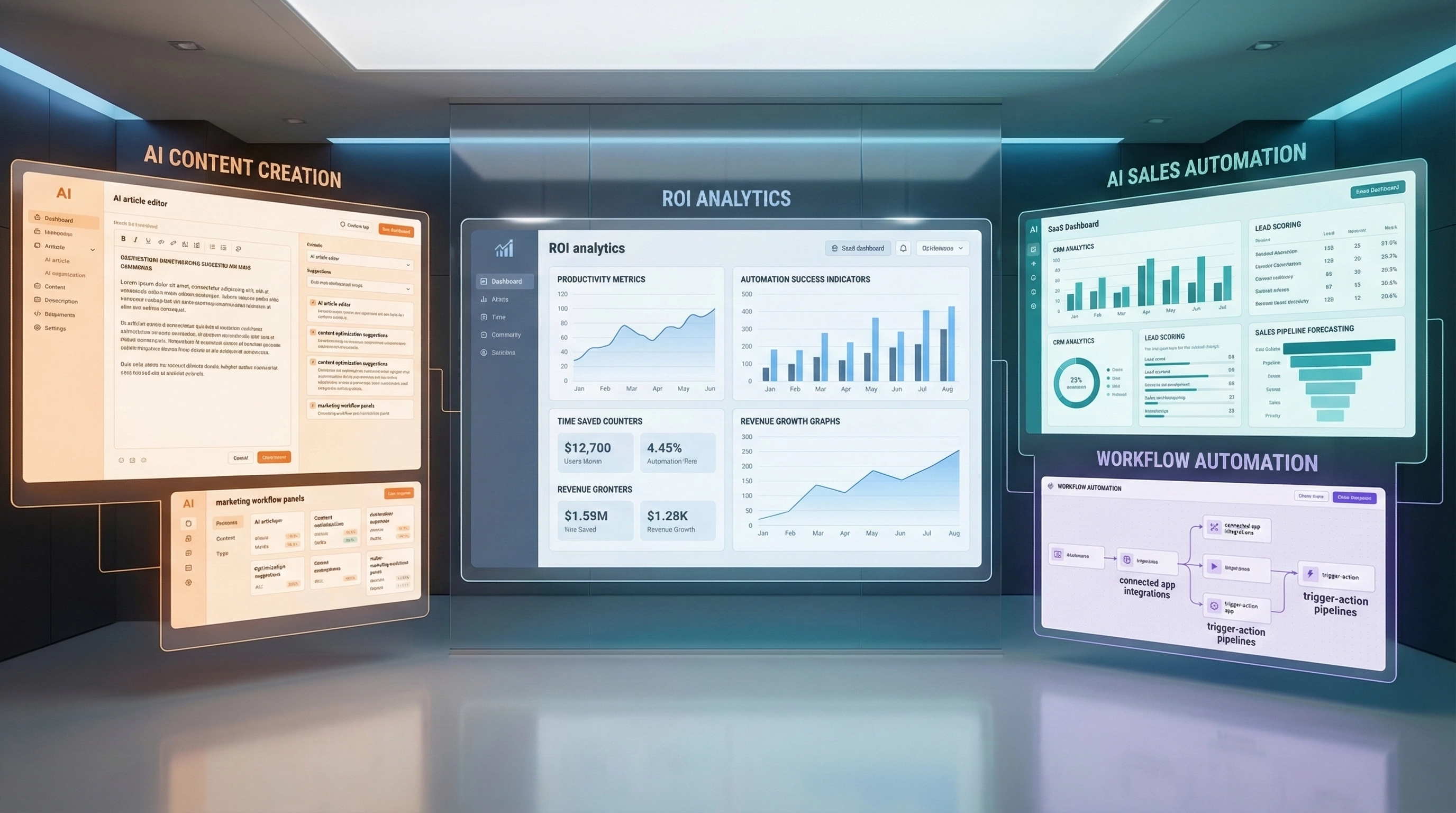
In this new economic paradigm, AI does not merely assist; it executes. We are no longer deploying software tools; we are hiring digital labor. The landscape has split into two distinct categories: Task-Agents (handling single functions like scheduling meetings or generating reports) and Orchestrator Agents (managing entire departments like Customer Success or DevOps, coordinating multiple sub-agents to achieve complex business objectives).
These agents possess identity, memory, and the autonomy to pursue complex goals across days or weeks. They negotiate with vendors, optimize supply chains, and write production code. But here's the crucial evolution: humans have transitioned from operators to supervisors. We no longer execute the work; we approve, edit, and validate agentic decisions. This is the new "Human-in-the-Loop" (HITL) model—humans as editors of machine labor rather than performers of the labor itself.
The metric of success has moved from "Tokens Per Second" to "Workflows Per Hour." An AI that generates text is a commodity; an AI that completes a job is an asset. We've entered the "Inference-Time Scaling" era, where agents deliberately "think" longer to ensure 99% accuracy in execution, trading speed for reliability.
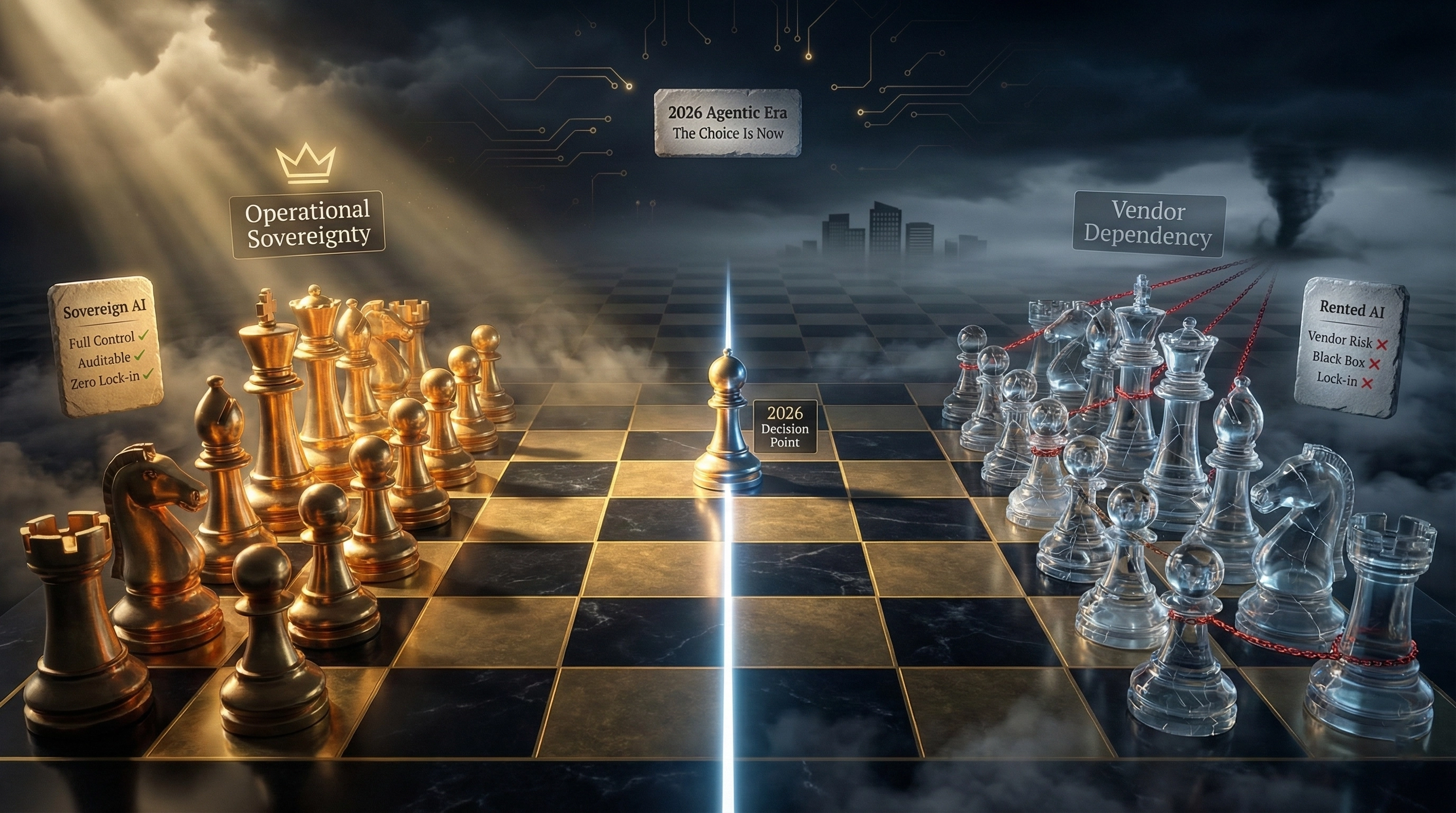
However, this shift creates a profound vulnerability. When your "workforce" consists of API calls to a centralized provider, you are not outsourcing IT—you are outsourcing your company's cognitive metabolism. This realization is driving the surge in demand for Operational Sovereignty.
The Operational Sovereignty Crisis
Operational Sovereignty is the ability of an organization to possess total control over its decision-making infrastructure. In the pre-AI era, this was simple: you owned the servers, you hired the humans, and you owned the data.
Today, a dangerous "Intelligence Rentier" model has emerged. Many enterprises are building their entire future on top of closed, proprietary models hosted by three or four hyperscalers. They are piping their proprietary data, customer interactions, and internal logic into black boxes they cannot inspect, audit, or control.
The DeepSeek Effect: Sovereignty Now Fiscally Viable
The "DeepSeek Shock" of January 2025 fundamentally altered this calculus. When DeepSeek demonstrated that world-class AI performance could be achieved with $6 million in training costs and run efficiently on consumer-grade hardware, it shattered the myth that operational sovereignty required billion-dollar budgets. Mid-sized companies can now deploy on-premise agentic infrastructure at a fraction of the projected cost, making sovereignty a financially viable strategic choice rather than a luxury reserved for tech giants.
Data Residency & Regulatory Compliance
The evolved EU AI Act and similar 2026 regulations worldwide now mandate that certain high-risk agentic decisions (credit approvals, hiring recommendations, healthcare diagnostics) must be made on sovereign, auditable infrastructure. Companies can no longer claim ignorance about how their agents reached decisions—they must demonstrate full transparency and local data residency. Insurance premiums for businesses are now directly tied to their ability to explain AI logic trails.
Consider the implications of an "Agentic Supply Chain." If your sales department is run by autonomous agents dependent on a third-party model, a change in that model's alignment, pricing, or availability is not a software outage—it is a labor strike. You cannot fire the workers because you do not employ them; you only rent their time.
Strategic Risk: The "Rent-Seeker" Trap
The risks of the Agentic Economy are not just technical; they are geopolitical and economic. The "Rent-Seeker" trap occurs when an organization achieves short-term efficiency by adopting centralized agents, only to find themselves locked into a dependency loop that erodes margins and strategic autonomy.
1. The Data Gravity Inversion
Traditionally, software moved to where the data was. In the centralized agent model, data moves to where the intelligence is. By constantly sending proprietary context to external models to drive agents, companies are effectively training their future competitors. Your operational data is the curriculum for the next generation of general-purpose models.
2. The Auditability Gap
When an autonomous agent makes a mistake—denies a loan, crashes a server, or hallucinates a legal clause—who is responsible? If the reasoning process happened inside a "black box" API, you lack the audit trails required by 2026 regulations. Insurance companies now demand explainability: businesses without sovereign AI infrastructure face premium increases of 40-60% due to unquantifiable liability exposure. You cannot explain the "Why" because you do not own the "Brain."
3. Arbitrary Obsolescence
In a sovereign setup, you decide when to upgrade your tools. In a rented agentic setup, the provider decides. If a provider deprecates a specific model version that your agents are fine-tuned on, your entire operational workflow breaks overnight.
The Five Pillars of Sovereign Infrastructure
To survive the Agentic Economy, forward-thinking CTOs and boards are pivoting toward sovereign stacks. This does not necessarily mean building data centers, but it does mean owning the intellectual property of the agent.
The Sovereignty Checklist
The Sovereign Playbook for 2026
The path forward is not to reject AI, but to domesticate it. The winners of 2026 will be the "Agentic Orchestrators"—companies that treat AI models as interchangeable components rather than divine oracles.
Step 1: The Hybrid Pivot. Move away from pure API dependency. Use massive proprietary models for brainstorming, but move execution and daily labor to smaller, specialized open models that run within your Virtual Private Cloud (VPC).
Step 2: Invest in "AI Ops" not just "DevOps." You need a team dedicated to monitoring the psychology and drift of your agents. In 2026, "debugging" looks more like performance management reviews for digital employees.
Step 3: Define Your Sovereign Core. Identify the 20% of workflows that define your competitive advantage. These must run on sovereign infrastructure. The other 80% (commoditized tasks) can remain on rented public intelligence.
Step 4: Agentic Performance Reviews. HR departments are being restructured to manage both human and digital labor. Establish quarterly "Agentic Performance Reviews" where you audit agent efficiency, decision quality, and alignment drift. Agents that consistently hallucinate or miss targets must be "retrained" or "retired"—just like human employees. This dual workforce management is now a C-suite responsibility.
Sovereignty is expensive, but autonomy is priceless. In an economy where intelligence is the primary input, owning the means of production means owning the AI itself.
Frequently Asked Questions
Is "Sovereign AI" just for governments?
No. While it started with nations protecting data, in 2026 it is a corporate imperative. Any enterprise with sensitive IP or regulatory requirements needs sovereign AI to prevent data leakage and ensure business continuity independent of big tech providers.
Are open models actually good enough for agents?
Yes. The gap has closed. For specific, domain-narrow tasks (which is how agents work best), fine-tuned open models often outperform general-purpose proprietary giants because they are faster, cheaper, and more consistent.
What is the biggest risk of staying with centralized AI?
Vendor lock-in and pricing power. Once your operational workflows are hard-coded to a specific proprietary model's quirks, migrating away becomes technically impossible. The provider can then raise prices or change terms with impunity.